 lilora
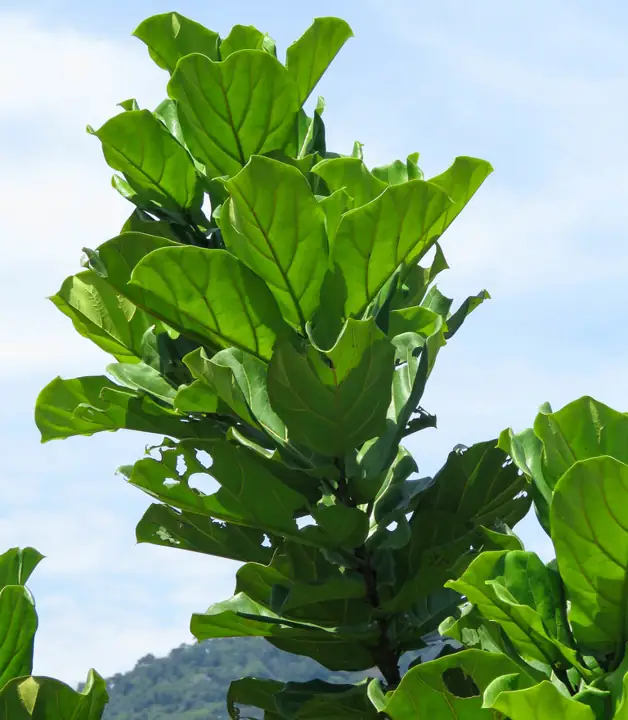
Fiddle-leaf fig is a West and Central African tree grown indoors for its large, violin-shaped leaves. It needs bright indirect light, steady warmth away from draughts, and careful watering because it is sensitive to overwatering. Move it as little as possible. Pet-safety sources disagree, so treat it as a plant to keep away from pets. NC State Extension
Light
It prefers bright indirect light and benefits from protection from strong afternoon sun. The RHS notes that some figs tolerate a few hours of morning or evening sun, mainly in winter. Too little light leads to slow growth and leaf drop; a sudden move into hot sun can scorch. NC State Extension · RHS
See the indoor light guide.
How to check before watering
In spring and summer, water when the mix has dried slightly, using room-temperature water; in winter keep it only just moist. NC State describes the plant as sensitive to overwatering, and the RHS calls overwatering the most common cause of leaf drop in figs. Check a few centimetres down and lift the pot if you can. RHS
Our watering guide explains moisture checks.
Potting mix and pot
Use a free-draining, moisture-retentive potting mix in a heavy pot with drainage holes. Repot young plants in spring when roots fill the pot; for large plants, refreshing the top layer of mix can be easier.
Humidity and temperature
Keep it above 13 °C (55 °F); the RHS gives a minimum of 10–13 °C (50–55 °F). Avoid draughts and sudden swings. NC State notes that brown spots can follow temperature swings near vents. Medium to high humidity suits it. NC State Extension · RHS
Feeding
The RHS suggests a high-nitrogen fertilizer from spring to late summer, at the label rate. Do not feed in winter or to a plant with damaged roots. RHS
Common problems
- Leaf drop: overwatering, cold, draughts, low light or too much fertilizer. Look for the change that came first.
- Scorched patches: too much direct sun.
- Brown spots: temperature swings near vents, or excess water; check roots.
- Pests: scale, aphids, mealybugs, thrips and spider mites.
Use the yellow-leaf checks before acting.
Propagation
Take semi-ripe stem cuttings in spring or summer. Wear gloves: the plant has a sticky white sap that can irritate skin. RHS
Pets and people
Sources do not agree. The plant database of the ASPCA Animal Poison Control Center does not list Ficus lyrata by name, although it lists other figs as toxic. An ASPCA houseplant article groups fiddle-leaf fig with plants that can cause mild stomach upset and notes that the sap may irritate skin. NC State Extension lists it as toxic to cats and dogs. Keep it out of reach. If a pet chews it, contact a veterinarian or an animal poison control service. For people in Türkiye, the poison information line is 114 (UZEM). This is general information, not veterinary or medical advice.
Common questions
Why is my fiddle-leaf fig dropping leaves?
Common triggers are overwatering, cold draughts, low light and moving the plant. Check the mix first.
Can I put it outside in summer?
Only in a sheltered, warm spot out of harsh sun, and bring it in before nights cool.
Should I wipe the leaves?
Dust reduces light. Wipe gently with a damp cloth, supporting each leaf.