 lilora
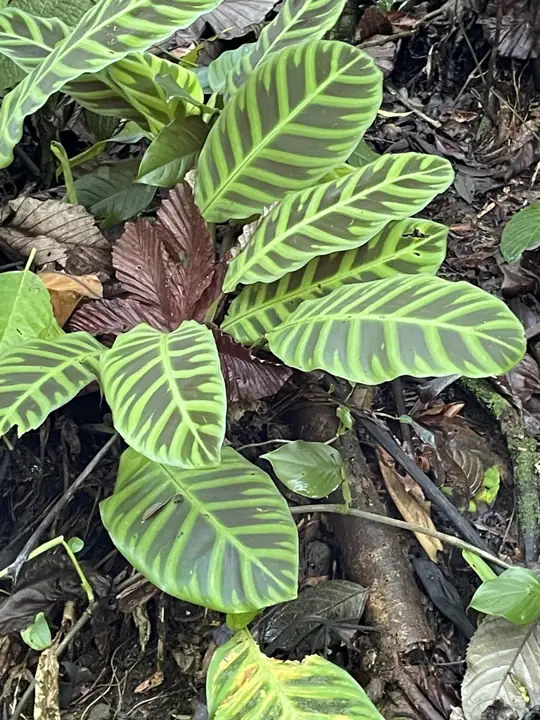
The plants sold as calatheas mostly belong to Goeppertia now; many were moved from Calathea after genetic studies. These Central and South American forest-floor plants want indirect, medium to low light, evenly moist but never soggy mix, soft water, steady warmth and high humidity. They are less forgiving than pothos. The ASPCA lists calatheas as non-toxic to cats and dogs. NC State Extension
Light
Give indirect, medium to low light. Direct sun scorches and fades the patterned leaves. A bright room away from the sunbeam, or a north-facing window, often suits them. Leaves fold up at night and open by day, which gives the family its “prayer plant” name. NC State Extension
Use the indoor light guide to check a spot.
How to check before watering
Keep the mix moist and well drained, but not wet or soggy. Check the surface often: water when the top of the mix has just started to dry, before the whole pot dries out. NC State recommends distilled water or rainwater rather than tap water, which can damage the leaves. NC State Extension
Curling or yellowing leaves can point to underwatering; drooping with rotting stems points to too much water or cold. Check the mix before acting. The watering guide explains how.
Potting mix and pot
Use a rich potting mix that drains freely, in a pot with holes. NC State suggests repotting annually to every two years, preferably in spring. NC State Extension
Humidity and temperature
Aim for about 18–24 °C (65–75 °F) and avoid sudden temperature changes and draughts. Raise humidity with a tray of wet pebbles, or grow it in a naturally humid room such as a bright bathroom or kitchen. NC State Extension
Feeding
Feed lightly during spring and summer with a diluted houseplant fertilizer, and flush the mix with plain soft water now and then. Salt build-up and hard water both show up as leaf damage.
Common problems
- Brown, crispy edges: often low humidity or tap-water chemicals.
- Scorched, faded patches: direct sun.
- Rotting stems and drooping: overwatering or cold.
- Pests: spider mites, mealybugs, scale and aphids. Grey mould can appear in still, damp air; remove affected parts and improve ventilation.
The yellow-leaf checks help you compare several clues.
Propagation
Divide the clump when repotting in spring, giving each piece its own roots and several leaves. Keep divisions warm and humid while they settle. NC State Extension
Pets and people
The ASPCA Animal Poison Control Center lists Calathea species as non-toxic to cats and dogs, and it lists related prayer plants (Maranta) as non-toxic too. Non-toxic does not mean a pet can eat it freely: chewing can still upset a stomach, and pesticide or fertilizer residues are a separate risk. If a pet seems unwell, contact a veterinarian. For people in Türkiye, the poison information line is 114 (UZEM). This is general information, not veterinary or medical advice.
Common questions
Why do calathea leaves move?
They fold upward in the evening and lower in the morning; this daily movement is normal.
Calathea or Goeppertia?
Many popular species are now named Goeppertia. Shops still use “calathea”.
Do I need distilled water?
NC State recommends distilled or rainwater because tap water can damage leaves.