 lilora
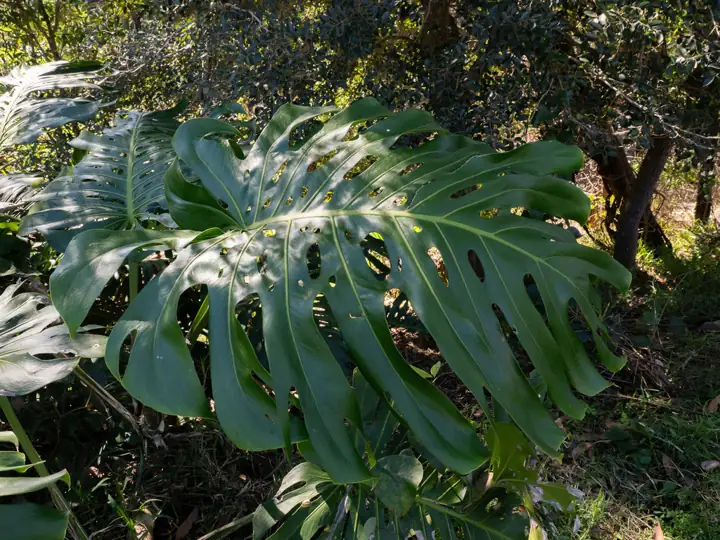
Monstera is a climbing aroid native from Mexico to Panama. Indoors it needs moderate to bright light without hot direct sun, a rich draining mix that dries in its upper third before watering, warmth and some humidity. Give older plants something to climb. The ASPCA lists it as toxic to cats and dogs. NC State Extension
Light
NC State Extension describes monstera as preferring moderate brightness rather than direct sun. A position a short distance from an east or west window, or a bright room where sunbeams do not sit on the leaves, usually works. Variegated cultivars need more light than plain green ones. NC State Extension
Leaves without splits on a mature plant, or long bare stems leaning toward the window, can point to too little light. See the indoor light guide for observing a spot.
How to check before watering
Water thoroughly, then let roughly the top quarter to a third of the mix dry before the next watering. In a 20 cm deep pot, that means checking several centimetres down, not just the surface. A wooden skewer pushed gently into the mix helps: damp particles clinging to it mean wait. NC State Extension
After watering, let surplus water drain and empty any outer pot. The watering guide explains why checks beat a fixed calendar.
Potting mix and pot
Use a mix high in organic matter that still drains well, in a container with holes. Monstera can grow large; repot in spring if roots are crowded, moving up modestly rather than into a much larger pot. Add a moss pole or sturdy stake: in nature it climbs, and supported stems tend to produce larger leaves.
Humidity and temperature
Monstera prefers an average warm temperature of about 16–29 °C (60–85 °F) and high humidity. In dry homes, NC State suggests a humidifier or a pebble tray. Keep it away from cold draughts and radiators. NC State Extension
Feeding
Feed during spring and summer with a balanced houseplant fertilizer at the label rate, and stop in winter. Do not feed a plant that is wilting or has wet, damaged roots.
Common problems
- Yellowing lower leaves with wet mix: check drainage and roots before watering again.
- Brown, crisp patches: possible sun scorch if it stands in direct sun.
- Scale insects: NC State lists fern scale as a common pest; check stems and leaf undersides.
The yellow-leaf checks help you look at the whole pattern.
Propagation
NC State lists stem cuttings and layering. A cutting needs a node, ideally with an aerial root. Root it in water or moist mix in a warm, bright spot. Prune or repot in spring if needed. NC State Extension
Pets and people
The ASPCA Animal Poison Control Center lists monstera (also called cutleaf philodendron) as toxic to cats and dogs because of insoluble calcium oxalates. The signs it lists are oral irritation, intense burning and irritation of the mouth, tongue and lips, excessive drooling, vomiting and difficulty swallowing. NC State adds that the sap may irritate skin. If a pet chews it, contact a veterinarian or an animal poison control service. For people in Türkiye, the poison information line is 114 (UZEM). This is general information, not veterinary or medical advice.
Common questions
Why doesn’t my monstera have split leaves?
Young leaves are often whole. Splits usually come with maturity, enough light and a stem that can climb.
Is monstera a philodendron?
No. It is sometimes sold as split-leaf philodendron, but it belongs to the genus Monstera.
What are the long brown roots on the stem?
Aerial roots. Guide them toward a pole or the mix; do not cut many off at once.