 lilora
A short answer
Both can make a plant wilt, yellow and drop leaves, so the leaves alone rarely settle the question. Feel the potting mix below the surface, compare the weight of the pot and, if the mix stays wet while the plant keeps declining, look at the roots. In houseplants, extension services see too much water more often than too little. University of Maine Extension
Why the two problems look alike
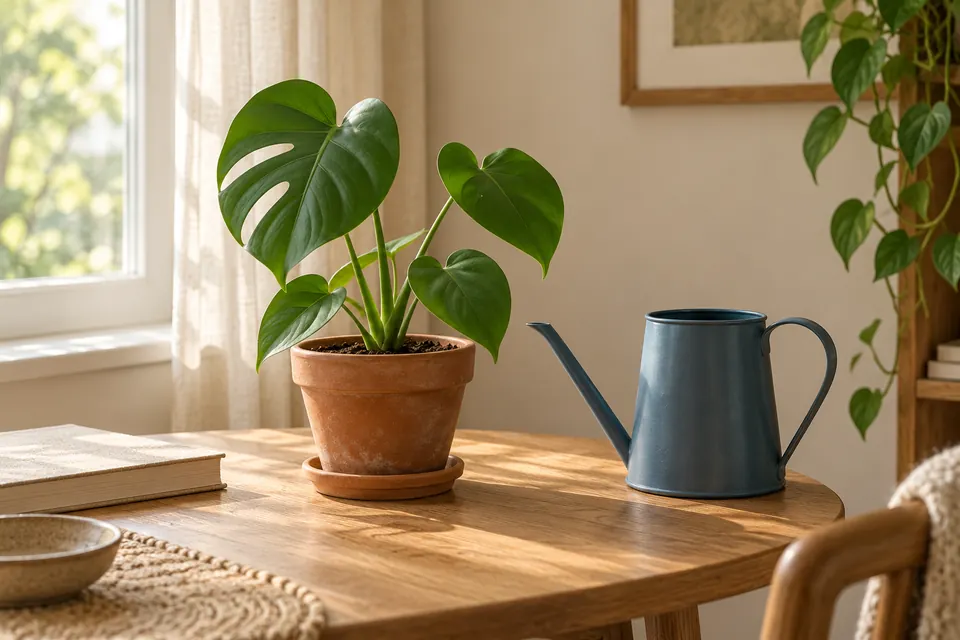
Roots need water and air. When the mix stays waterlogged, the air spaces fill with water and roots can die back. A plant with damaged roots cannot take up water, so it wilts as if it were dry. University of Maryland Extension: overwatered indoor plants
A plant that really is too dry wilts as well, and its leaf tips and edges may turn brown. Iowa State lists wilting, yellowing, browning and leaf drop among the problems that watering in either direction can cause. Iowa State University Extension
So "it is drooping, give it water" is the most common wrong move. Find out what is happening in the root zone first.
Check this before you act
The surface dries first and can look dry while the mix lower down is still wet. As a plant uses water, the mix also becomes lighter, so the weight of the pot is a useful second opinion. University of Maryland Extension: overwatered indoor plants
Note when you last watered and whether anything changed: heating switched on, a move away from the window, a new pot. The full routine is in our guide to watering without a rigid schedule.
Signs that point to too much water
- The mix is still wet several days after watering, and the pot stays heavy
- Water collects in the outer pot or saucer
- Lower and inner leaves yellow and soften
- The stem base feels soft or looks darker than before
- Small dark flies walk over the surface of the mix; fungus gnats are associated with damp compost RHS: fungus gnats
No single sign proves overwatering. Wet mix plus a plant that wilts anyway is the combination that justifies a closer look, described in our root rot guide.
Signs that point to too little water
- The pot feels light and the mix has shrunk away from the sides
- Water runs straight through the gap and out of the drainage hole
- Leaf edges feel crisp rather than soft
- The plant stands up again within hours of a thorough watering
Underwatering usually comes from frequent small sips that never wet the whole root ball. University of Maine Extension advises soaking the root ball and letting the excess drain away. University of Maine Extension
What to do next
If the mix is dry:
- Water slowly until water runs out of the drainage hole.
- If it rushes down the sides, wait a few minutes and water slowly again so the root ball can take it up.
- Let the pot drain, then empty the saucer or outer pot. Illinois Extension: watering
If the mix is wet:
- Empty any standing water and do not water again yet.
- Keep the plant in light that suits its species; do not move a shade-loving plant into harsh sun to dry it out.
- Hold back on fertiliser until you know the roots are healthy.
- If the mix stays wet and the plant keeps declining, inspect the roots.
Leaves that change colour have their own checklist in yellow houseplant leaves: what to check.
Season and light change the answer
A plant in low winter light or a cool room uses less water, so a routine that suited summer can leave the mix wet for longer. In the Northern Hemisphere that slowdown usually runs from late autumn to late winter; in the Southern Hemisphere it falls around June to August. Heating can dry pots faster again, which is why checking beats counting days. See winter houseplant care and our indoor light guide.
Lilora keeps a check and a watering as two different records, "Checked, no water needed" and "Watered". After a few weeks you can see how often a plant actually needed water, instead of how often a reminder appeared.
Common questions
Should I water a wilting plant just in case?
No. Check the mix first. If it is wet, more water adds to the problem.
How dry should the mix get between waterings?
It depends on the plant. For many houseplants, the top 2–3 cm can dry before you water; cacti and succulents can dry out more fully. University of Maine Extension
Can an overwatered plant recover?
Often, if enough roots are still firm and pale. Let the mix dry to a suitable level and avoid other changes while it recovers.
Does a pot without a drainage hole matter?
Yes. Excess water has nowhere to go. Read potting mix and drainage before you water again.
Sources and further reading
- University of Maine Extension
- University of Maryland Extension: overwatered indoor plants
- Iowa State University Extension
- RHS: fungus gnats
- Illinois Extension: watering
General guidance, not a diagnosis. Check your species and growing conditions.