 lilora
A short answer
A houseplant pot needs a drainage hole, a potting mix made for containers (not garden soil), and nothing standing in water underneath. Fill the whole pot with suitable mix: a layer of gravel or crocks at the bottom does not improve drainage, and can leave the mix above it wetter. Use a decorative pot without holes only as an outer cover, and empty it after watering. Clemson Cooperative Extension: repotting indoor plants
Why the drainage hole matters
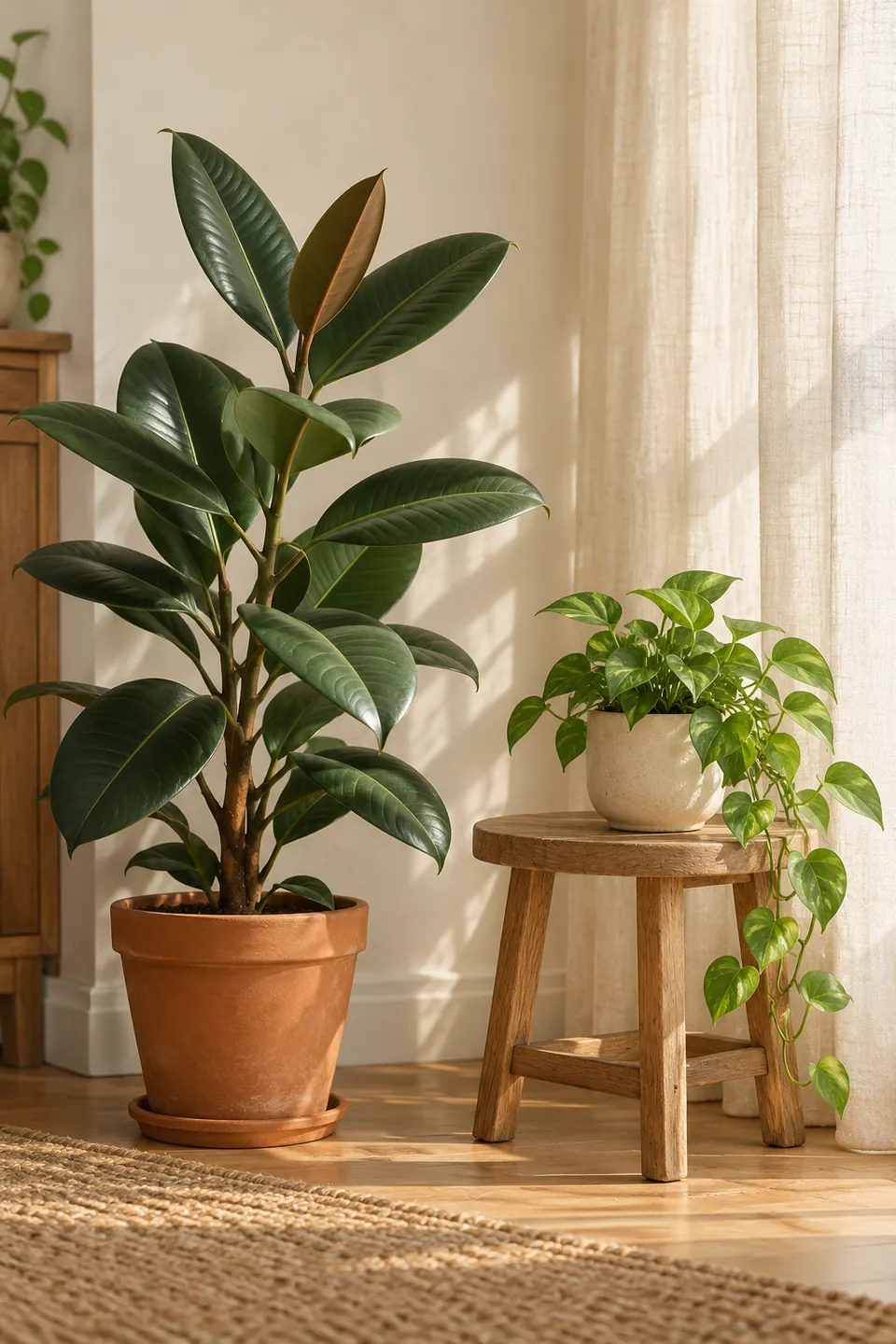
Roots need air as well as water. After watering, excess water must be able to leave the pot; otherwise the mix stays saturated, roots are starved of air and root rot becomes more likely. The RHS stresses drainage holes and emptying saucers for exactly this reason. RHS: how to grow houseplants
Penn State Extension also notes that containers need drainage holes so the mix does not stay waterlogged, which can lead to disease. Penn State Extension: repotting houseplants
The gravel layer myth
Many books still recommend a layer of gravel, stones or broken pot at the bottom "for drainage". Soil science points the other way. Water does not move easily from a fine material into a coarser one below it, so it collects in the mix just above the gravel. The saturated zone moves up the pot, closer to the roots, and the gravel takes space the roots could use. Washington State University: the myth of drainage material in containers
Clemson advises skipping the gravel layer for the same reason. If a large hole lets mix fall out, cover it with a small piece of mesh or a single shard rather than a layer. Clemson Cooperative Extension: repotting indoor plants The RHS likewise suggests covering only holes wider than about 2.5 cm. RHS: how to plant up a container
Check this before you pot
Choosing a potting mix
Houseplant mixes are usually soilless blends. Ingredients such as peat or peat-free alternatives (coir, composted bark, wood fibre) hold moisture, while perlite, pumice or bark add air spaces. Penn State Extension: repotting houseplants
- General houseplant mix: suits most leafy tropical plants.
- Cactus and succulent mix: grittier and faster draining.
- Orchid mix: usually chunky bark for epiphytic orchids, which grow on trees in the wild.
- Garden soil: avoid. In a pot it compacts, drains poorly and can carry pests, weed seeds and diseases.
Many gardeners now choose peat-free products to protect peatlands. The RHS often recommends peat-free compost for containers, though some plants have specific needs. RHS: how to plant up a container If a peat-free mix behaves differently from what you are used to, watch how quickly it dries and adjust your checks rather than your calendar.
Pot size and material
Choose a pot only a little wider than the old one, about 2.5–5 cm larger in diameter for most plants. A pot much bigger than the root ball holds extra mix that stays wet. Clemson Cooperative Extension: repotting indoor plants
Unglazed terracotta lets water evaporate through its walls, so the mix dries faster. Plastic and glazed ceramic hold moisture longer. Neither is better in general; it changes how often you will need to water.
A decorative pot without a hole is fine as an outer cover (cachepot). Lift the inner pot out to water, or empty the outer pot every time. This simple step prevents much of the trouble described in root rot in houseplants.
How to pot up, step by step
- Water the plant a day before so the root ball holds together.
- Prepare a clean pot with a drainage hole and fresh mix.
- Put a little mix in the bottom so the top of the root ball will sit about 1–2 cm below the rim.
- Set the plant in at the same depth as before, fill around the sides and firm gently without packing hard.
- Water until it drains, then empty the saucer.
Our guide on when to repot explains the signs that a plant needs a new pot, and how to water without a rigid schedule covers watering afterwards.
Common questions
Can I make a hole in a ceramic pot?
Sometimes, with the right drill bit and care. If you are unsure, use the pot as an outer cover instead.
Is self-watering a good idea?
Self-watering pots can suit some plants, but the reservoir must not keep the mix permanently wet. Follow the pot's instructions and keep checking the mix.
Does the mix wear out?
Over time it breaks down and holds more water and less air. Repotting into fresh mix every few years, or when the plant needs it, helps. Large pots can be refreshed by replacing the top few centimetres.
How do I know if my pot drains well?
Water slowly: excess water should run out of the hole soon after the mix is soaked, then stop. If it pools on top or never drains, check the hole and the mix. See overwatered or underwatered?
Sources and further reading
- Clemson Cooperative Extension: repotting indoor plants
- RHS: how to grow houseplants
- Penn State Extension: repotting houseplants
- Washington State University: the myth of drainage material in containers
- RHS: how to plant up a container
General guidance, not a diagnosis. Check your species and growing conditions.