 lilora
A short answer
In winter most houseplants get less light and grow more slowly, so they use less water and need little or no fertiliser. Move plants closer to the brightest window you have (but not against cold glass), keep them away from radiators, heaters and draughts, and check the mix before every watering rather than keeping the summer routine. This advice is written for winters with short days and indoor heating, which in the Northern Hemisphere usually run from about November to February. Illinois Extension: houseplant care
Light is the main limit
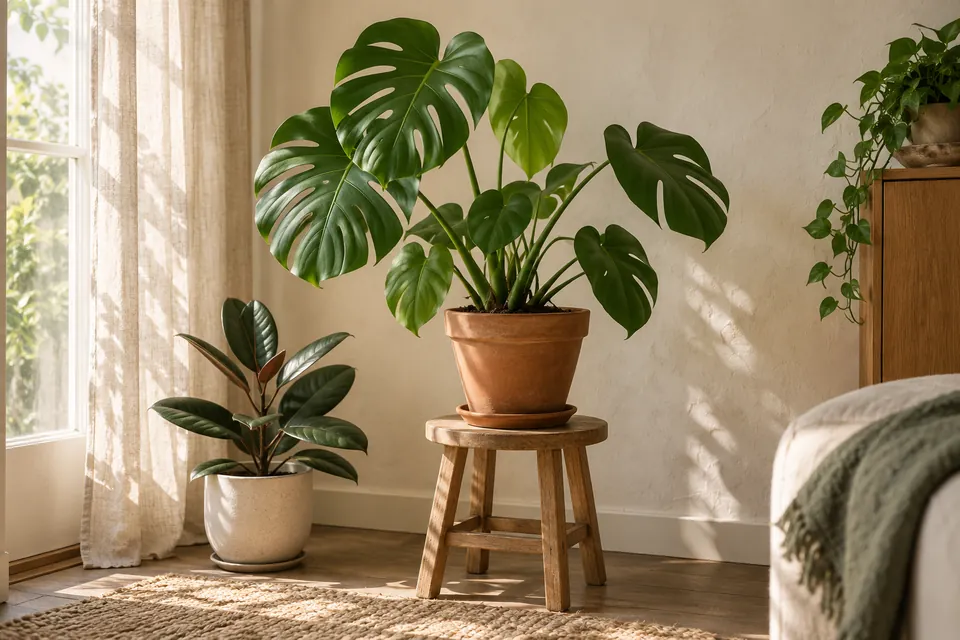
Days are shorter and the sun is lower, so a spot that was bright in June can be dim in December. University of Minnesota Extension suggests supplemental lighting where window light is not enough, such as an LED grow light run for roughly 12 to 14 hours a day, and rotating plants that lean towards the window. University of Minnesota Extension: winter houseplant tips
Before you buy a lamp:
- Move light-loving plants to the brightest window, a little back from the glass.
- Clean the window and dust the leaves so more light reaches them.
- Rotate pots a quarter turn every week or two.
- Accept slower growth; a few lower leaves dropping after a move can be part of adjusting.
Our indoor light guide explains how to judge a spot.
Water less often, but check every time
Less light and cooler rooms mean slower growth and slower drying. Many plants need water less often in winter, and the classic winter mistake is watering on the summer schedule. Overwatered roots in cold, wet mix are at risk of rot. Illinois Extension: houseplant care
But heating can make some pots dry faster than you expect, especially small pots near a radiator. So the rule is not "water less" but "check, then decide":
- Feel the mix below the surface and lift the pot.
- Water thoroughly when the plant needs it, and empty the saucer.
- Use water at room temperature; the RHS advises against cold water in winter. RHS: how to grow houseplants
See overwatered or underwatered? and how to water without a rigid schedule for the full check.
Heating, draughts and cold glass
Most common houseplants are tropical and do best in a steady room temperature. Problems usually come from extremes: hot dry air blowing from a heater, cold air from an opened door, or leaves touching a cold window at night. Temperature stress can cause leaf drop, browning and wilting. University of Maryland Extension: non-living causes of indoor plant problems
- Keep foliage away from radiators, fan heaters and vents.
- Move plants back from single-glazed windows on frosty nights, and do not trap them between a closed curtain and the glass.
- Avoid placing plants in the path of a regularly opened outside door.
Dry air
Indoor air is often driest when the heating is on. Misting does not raise humidity for long; a humidifier, or grouping plants away from heat sources, helps a little more. Iowa State University Extension: raising humidity Our humidity guide covers what works.
Hold back on feeding and repotting
With growth slowed, most plants need little or no fertiliser in winter. Illinois Extension: houseplant care Resume when new growth appears in spring; see feeding houseplants.
Repotting is also best left to the growing season unless there is an urgent root problem. Clemson Cooperative Extension: repotting indoor plants
Climates and hemispheres
In the Southern Hemisphere, the same conditions usually fall around June to August. In mild or tropical climates without heating, the main changes may be fewer daylight hours, cloudy seasons or air conditioning. Apply the principle rather than the month: when light and growth slow, water and feed less, and keep checking.
Lilora's reminders say "check" rather than "water" for exactly this reason. Recording "Checked, no water needed" in winter is a normal result, and the history shows how the plant's needs changed with the season.
Common questions
My plant drops leaves every winter. Is that normal?
Some leaf drop after a move to lower light is common. Steady, widespread loss calls for a look at watering, draughts and pests.
Should I put plants outside on mild winter days?
Usually not. Sudden changes in light and temperature stress houseplants.
Do I need a grow light?
Only if your brightest spot is too dim for the plant. Start by moving it closer to a window.
When should I go back to normal care?
When days lengthen and new growth appears. Increase watering and feeding gradually, following the plant.
Sources and further reading
- Illinois Extension: houseplant care
- University of Minnesota Extension: winter houseplant tips
- RHS: how to grow houseplants
- University of Maryland Extension: non-living causes of indoor plant problems
- Iowa State University Extension: raising humidity
- Clemson Cooperative Extension: repotting indoor plants
General guidance, not a diagnosis. Check your species and growing conditions.