 lilora
A short answer
Take a healthy stem tip with a few nodes (the points where leaves join the stem), cut just below a node and remove the lowest leaves. Many trailing and climbing houseplants root in a glass of water; others do better in a moist, airy rooting mix. Water is easy to watch; a rooting mix often gives roots that adjust to a pot more easily. Spring and early summer, when plants are growing, are the easiest time. University of Vermont Extension: propagating houseplants
What a cutting needs
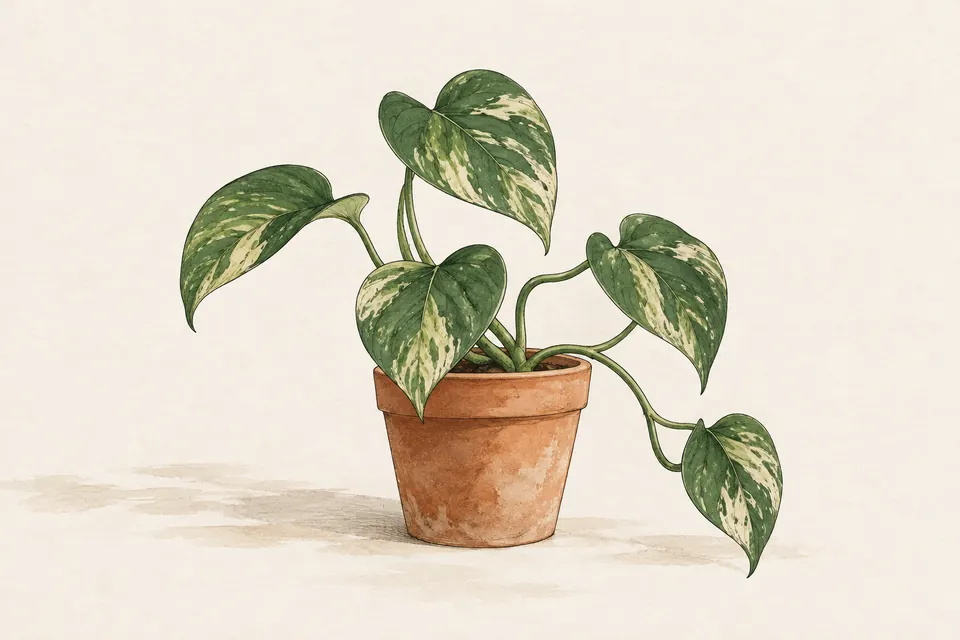
A cutting is a copy of the parent plant. It needs at least one node, because new roots usually grow from there, plus a few leaves to make energy. The University of Vermont describes a node as the bump where the leaf meets the stem, and suggests a tip cutting of about 8–15 cm with several nodes. University of Vermont Extension: propagating houseplants
Choose firm, healthy growth without pests. Stem cuttings root best from relatively young growth. Missouri Botanical Garden: propagating indoor plants
Not every houseplant grows from stem cuttings. Some are propagated from leaves, such as Cape primrose (Streptocarpus), snake plant (Sansevieria) and some peperomias, and some succulents root from a single leaf. RHS: leaf cuttings Others are divided or grown from offsets. Check your species before you cut.
How to take a stem cutting
- Water the parent plant a day before, so the stems are not limp.
- Cut a tip of about 8–15 cm, just below a node.
- Strip the leaves from the lowest node or two.
- Root it in water or a rooting mix, as described below.
- Label it with the plant name and the date.
University of Nevada, Reno Extension describes the same basic method for soft-stemmed plants such as philodendron and hoya, with rooting powder as an optional step. University of Nevada, Reno Extension If you use a rooting product, follow its label.
Rooting in water
Put the cutting in a clean glass or jar so the bare nodes are under water and the leaves stay above it. Keep it in bright light out of direct hot sun. Change the water regularly, and rinse the glass if it turns cloudy or slimy.
Water rooting suits many trailing and climbing plants, such as pothos (Epipremnum), heartleaf philodendron and tradescantia. The advantage is that you can see roots forming. The drawback is that roots grown in water are adapted to water, and can have a harder time when moved to a pot. Missouri Botanical Garden: propagating indoor plants
Pot the cutting once the roots are a few centimetres long, rather than waiting for a large tangle. Keep the new pot slightly moist for the first weeks while the roots adjust.
Care for a rooted pothos is covered in our pothos profile.
Rooting in mix
Use a light, free-draining rooting medium such as perlite, vermiculite or a mix of potting compost with perlite. Missouri Botanical Garden notes that a mix like this works better than ordinary potting soil. Missouri Botanical Garden: propagating indoor plants
- Moisten the mix and fill a small pot with a drainage hole.
- Make a hole with a pencil and insert the cutting so the bare nodes are covered.
- Firm the mix gently around the stem.
- Cover loosely with a clear bag or lid to keep humidity up, and air it now and then.
- After a few weeks, a gentle tug that meets resistance means roots have formed.
For succulents, let the cut end dry for a few days before inserting it in a gritty mix, and keep it on the dry side.
The RHS propagation pages describe several techniques, including heel cuttings for some plants. RHS: propagation techniques
Aftercare
Once potted, treat the young plant like any other: check the mix before watering, give it suitable light, and wait until it is growing before feeding. Our guides to watering without a rigid schedule, indoor light and potting mix and drainage cover the basics, and when to repot explains the next step up.
A cutting is also a way to save part of a plant whose roots have rotted, if a stem is still healthy; see root rot in houseplants.
Common questions
How long does rooting take?
It varies with the plant, light and warmth, from a couple of weeks to over a month. Patience is part of the method.
Can I root a single leaf of a pothos or monstera?
A leaf without a node will usually not grow a new plant. Include a node.
Why did my cutting rot?
Common reasons are leaves under water, stale water, a cutting without a healthy node, or mix that stayed too wet.
Can I share cuttings with friends?
Yes, but check plants and cuttings for pests before you pass them on, and keep cuttings within national rules if they cross a border.
Sources and further reading
- University of Vermont Extension: propagating houseplants
- Missouri Botanical Garden: propagating indoor plants
- RHS: leaf cuttings
- University of Nevada, Reno Extension
- RHS: propagation techniques
General guidance, not a diagnosis. Check your species and growing conditions.